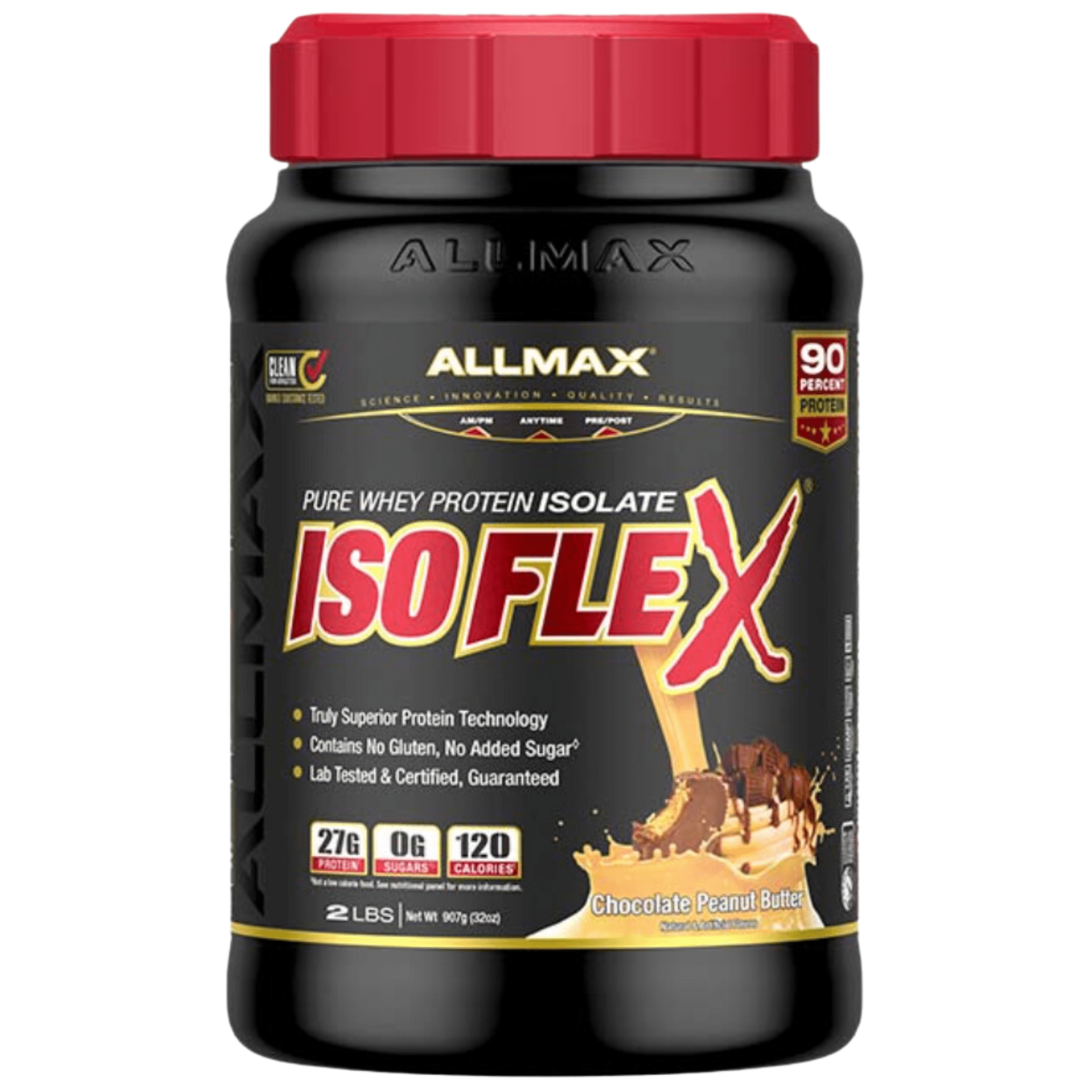
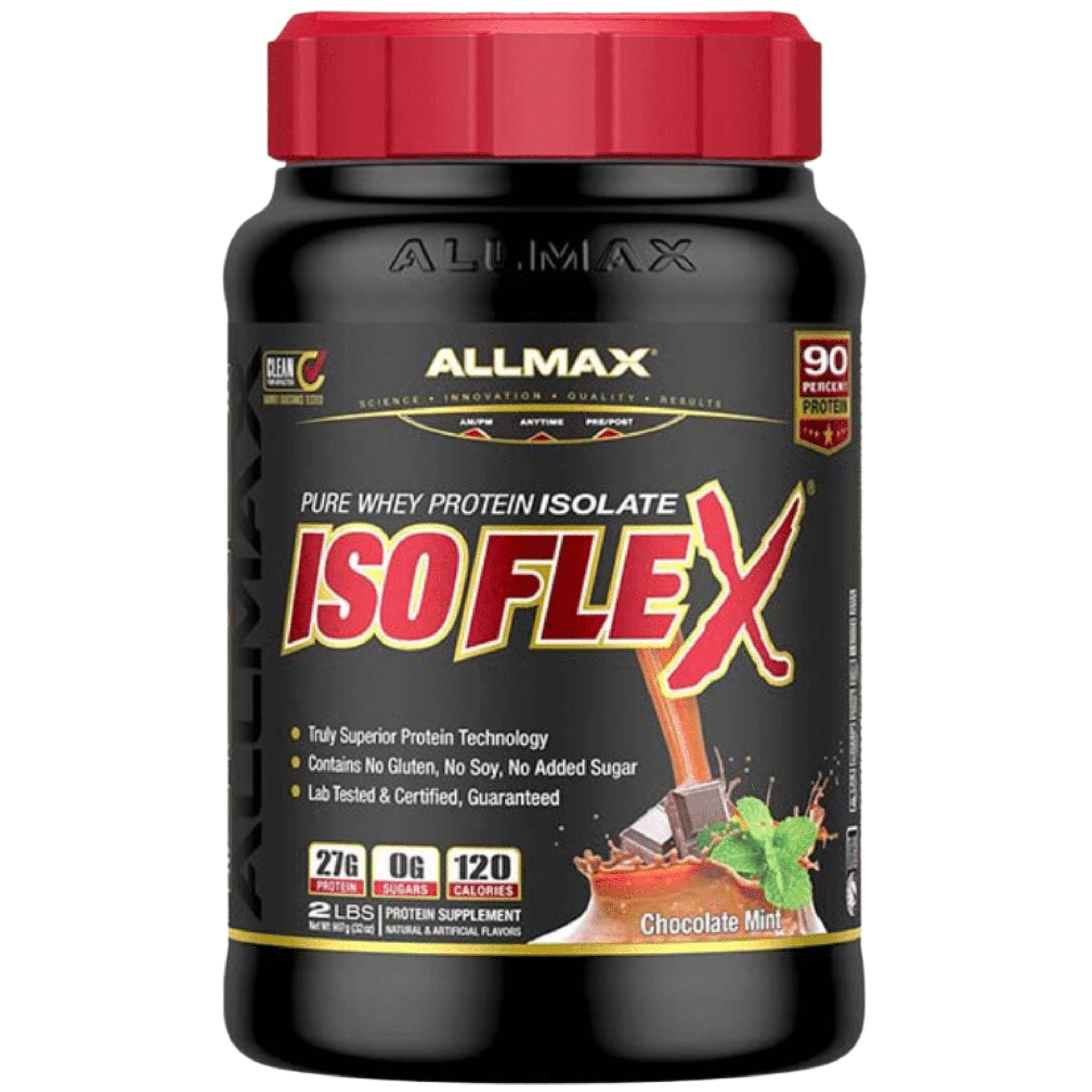
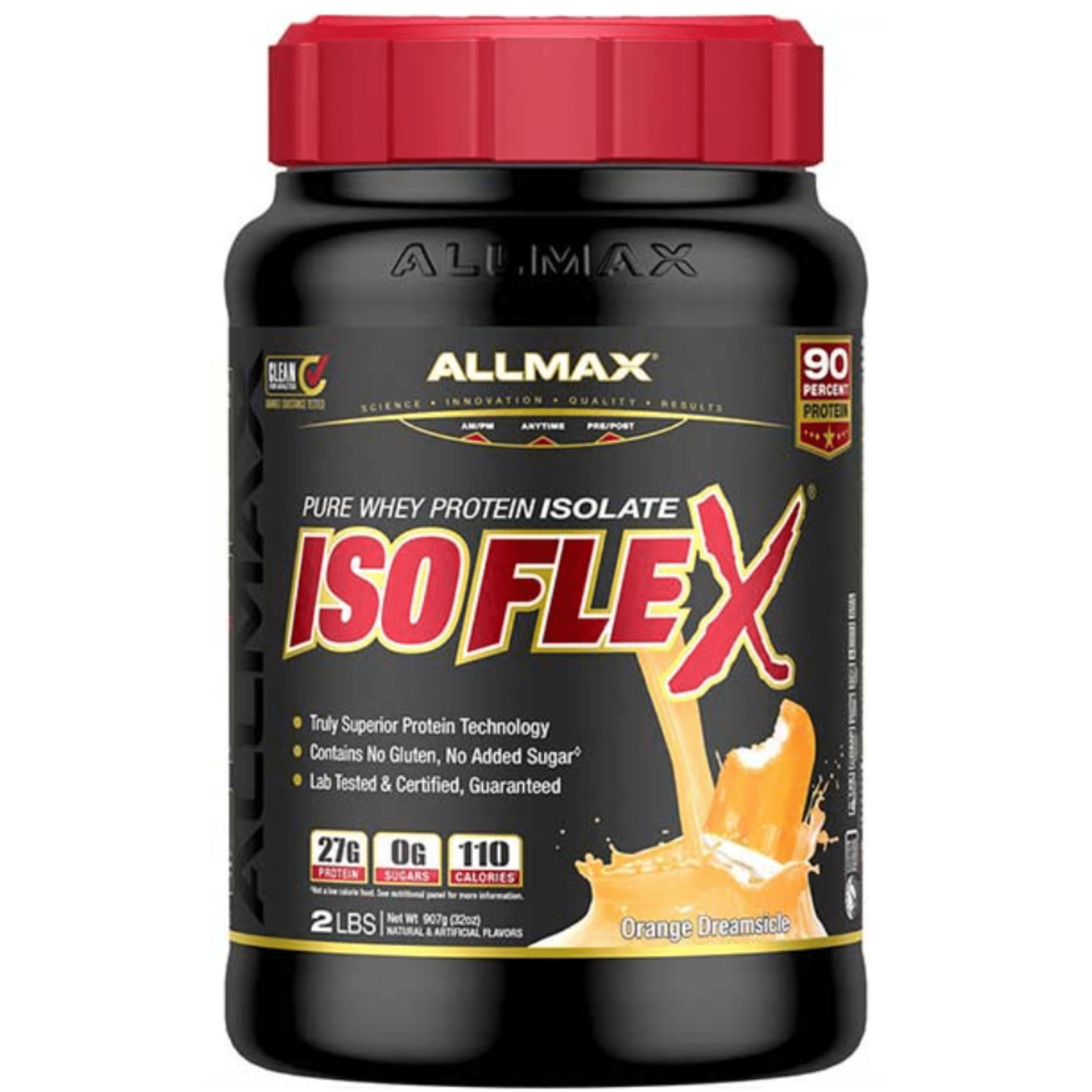
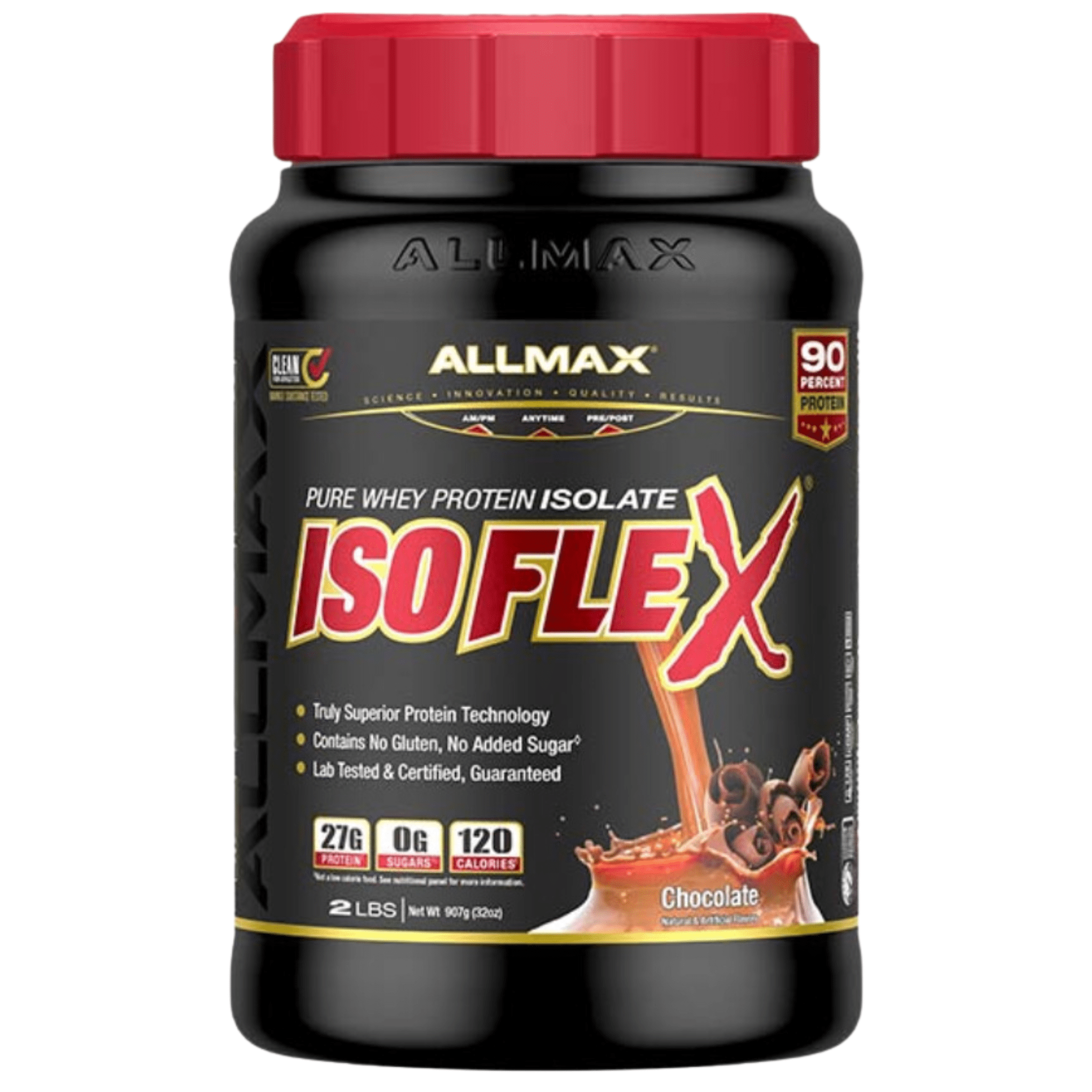
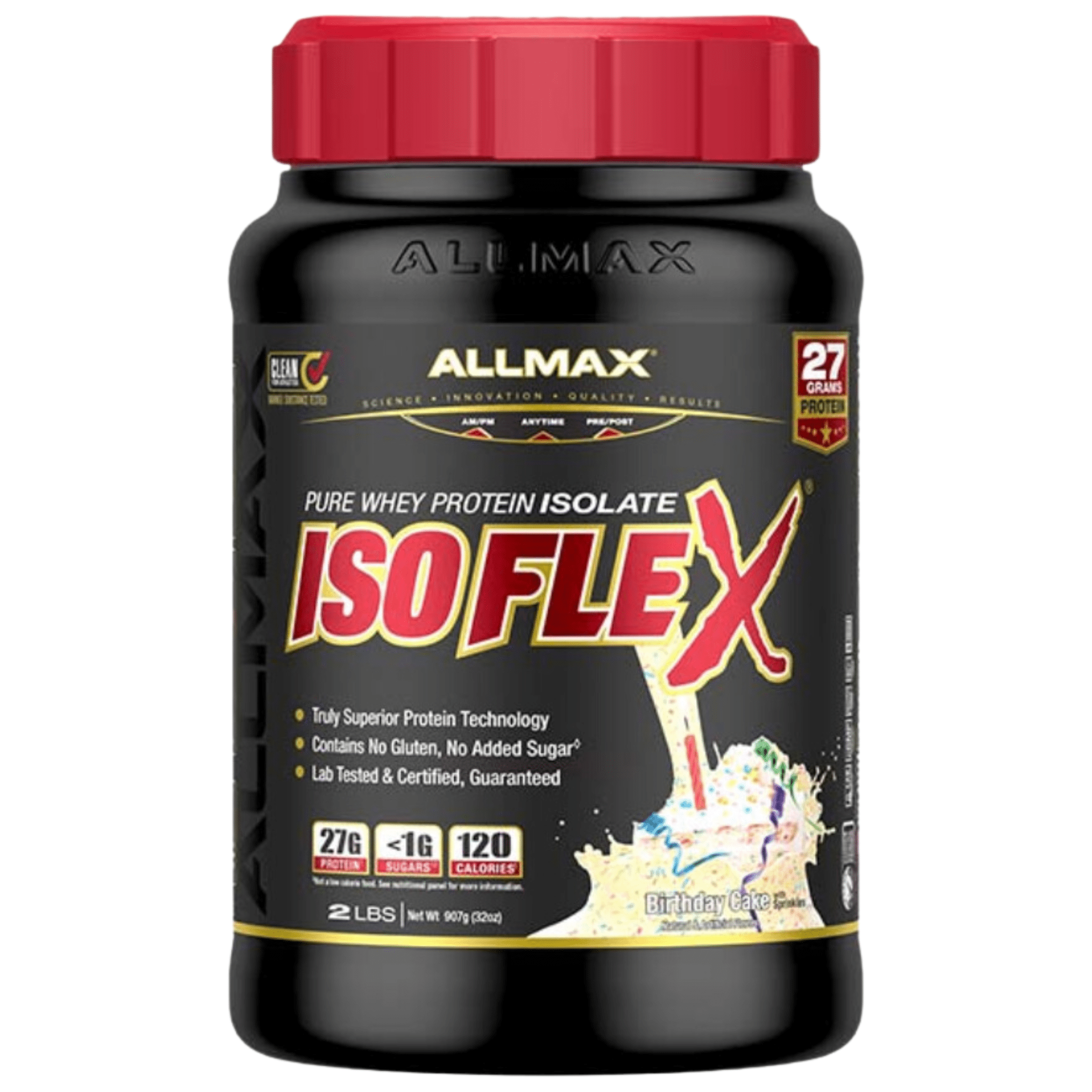
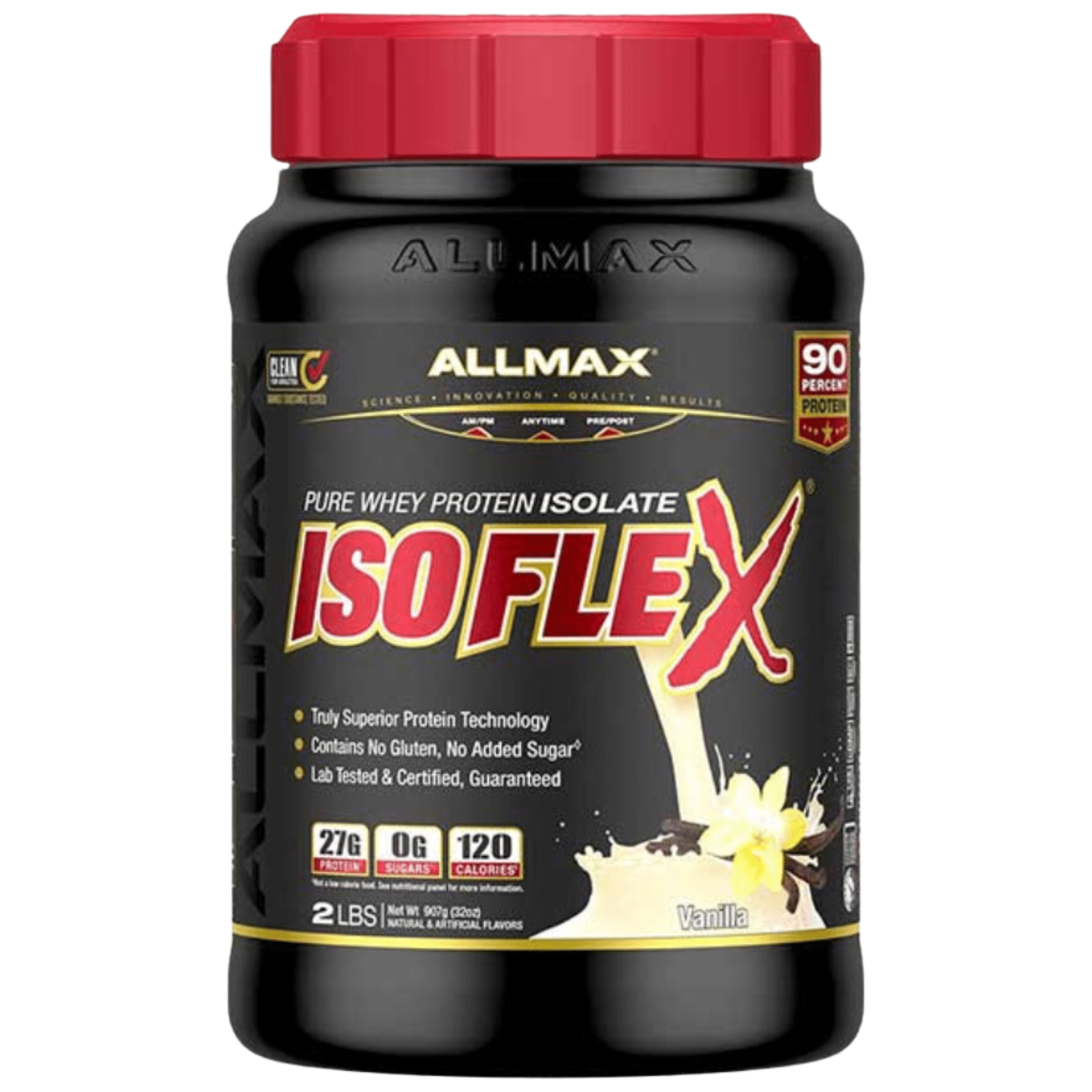
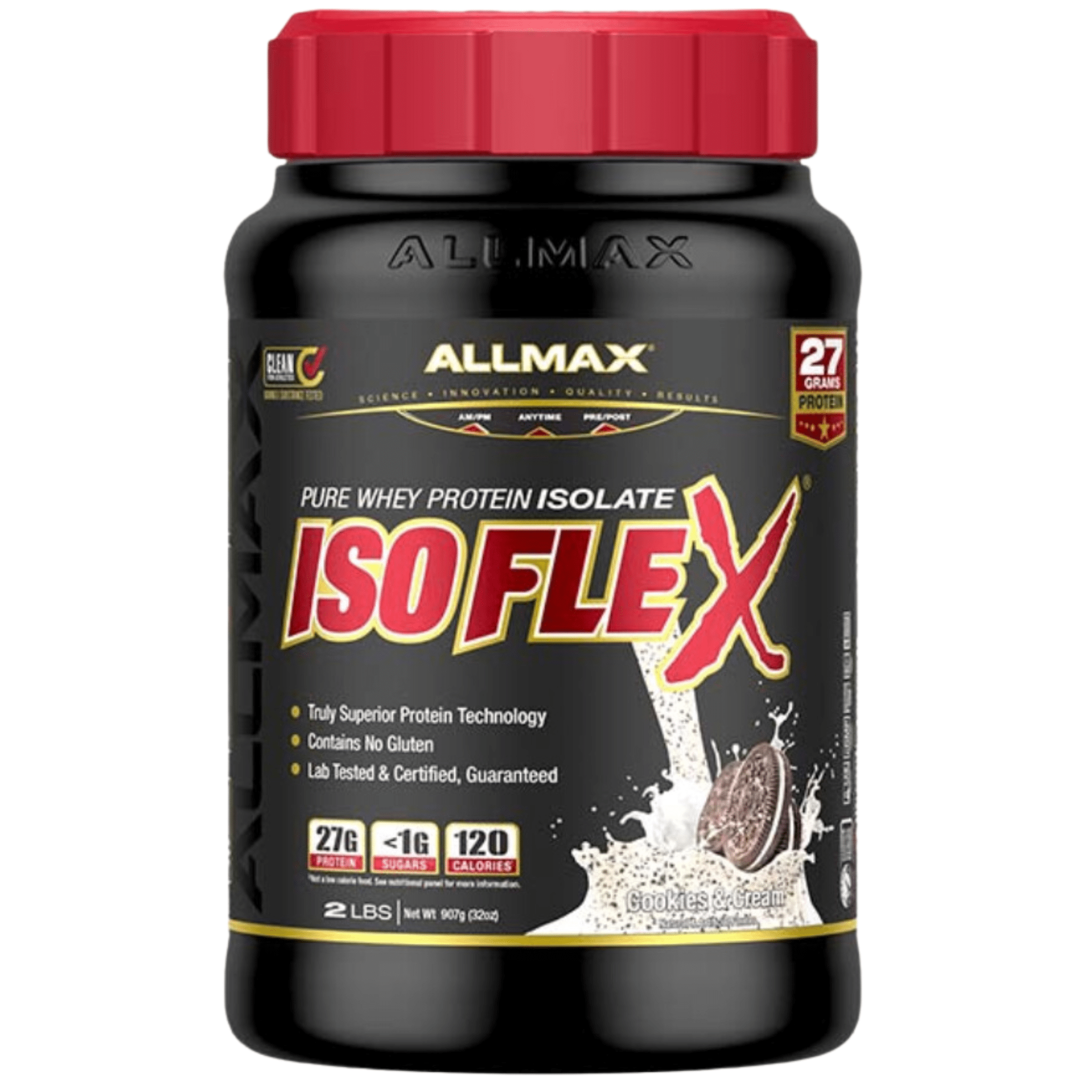
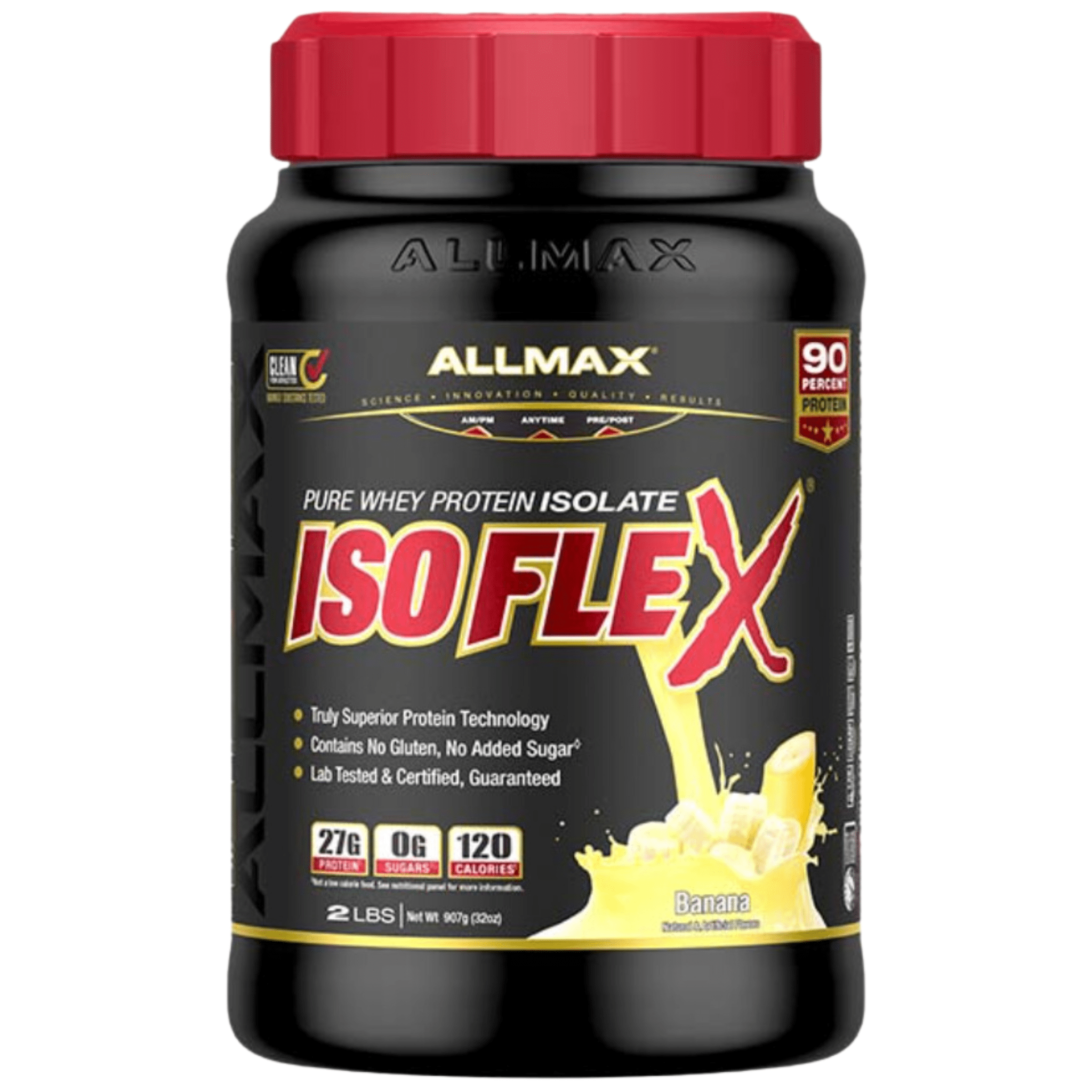
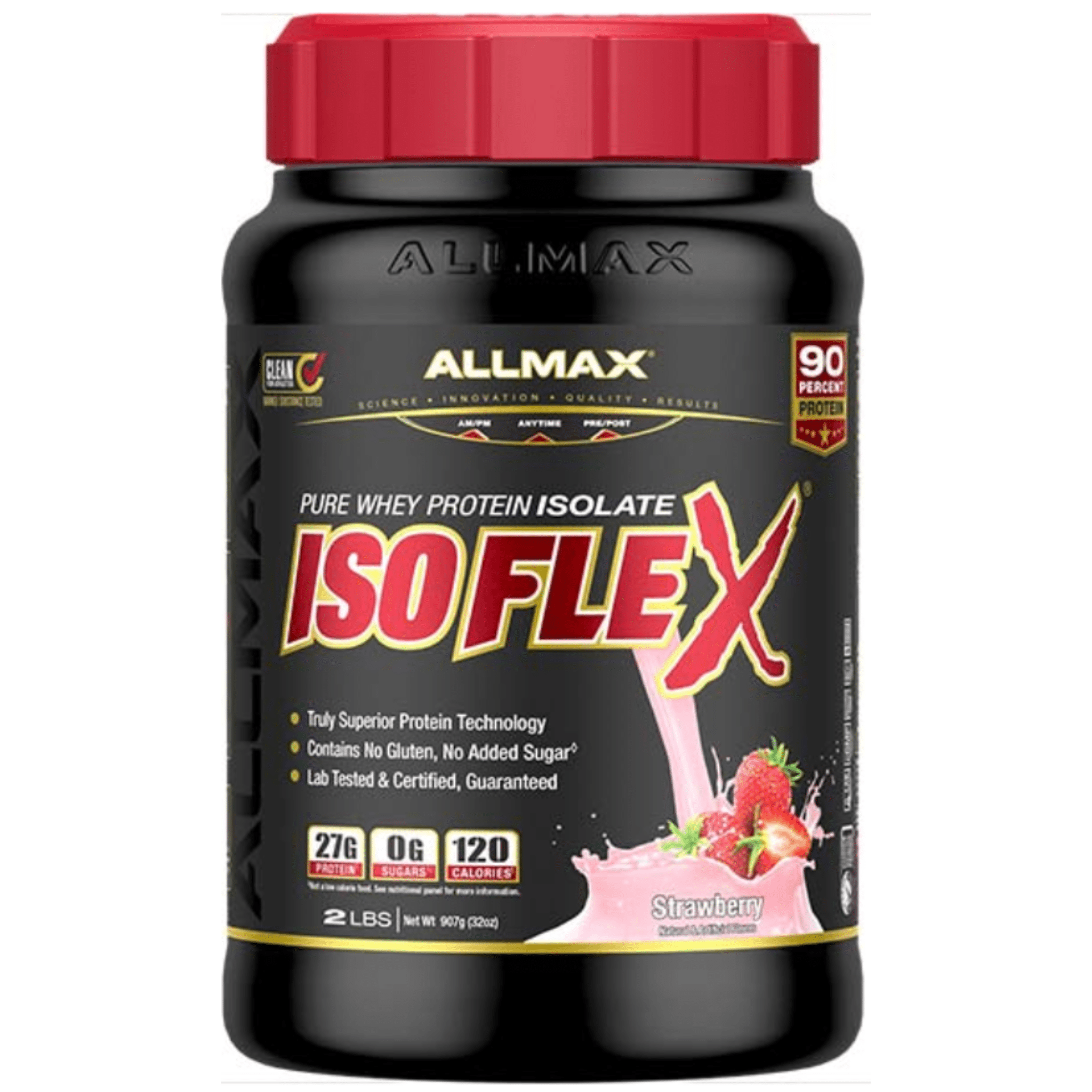
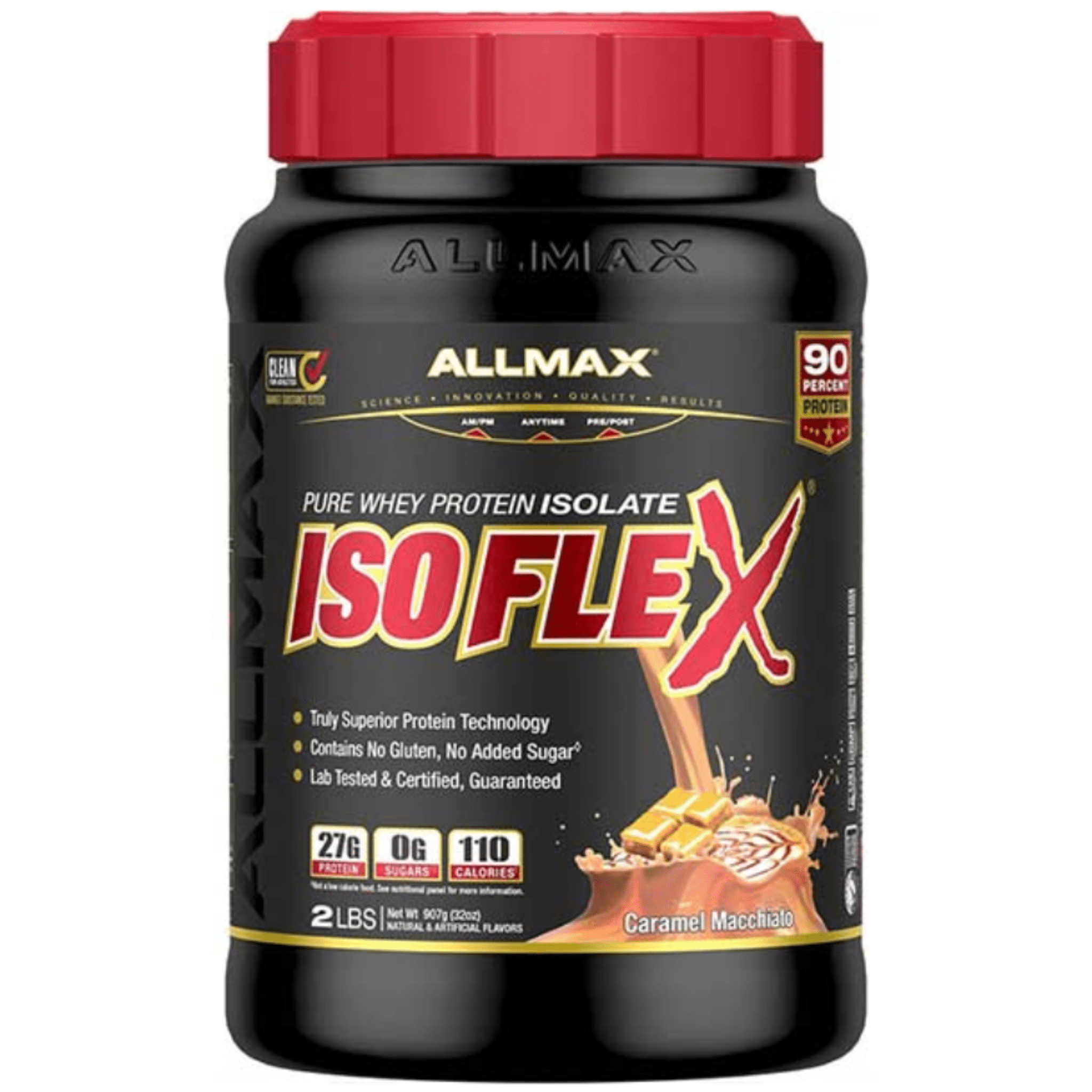
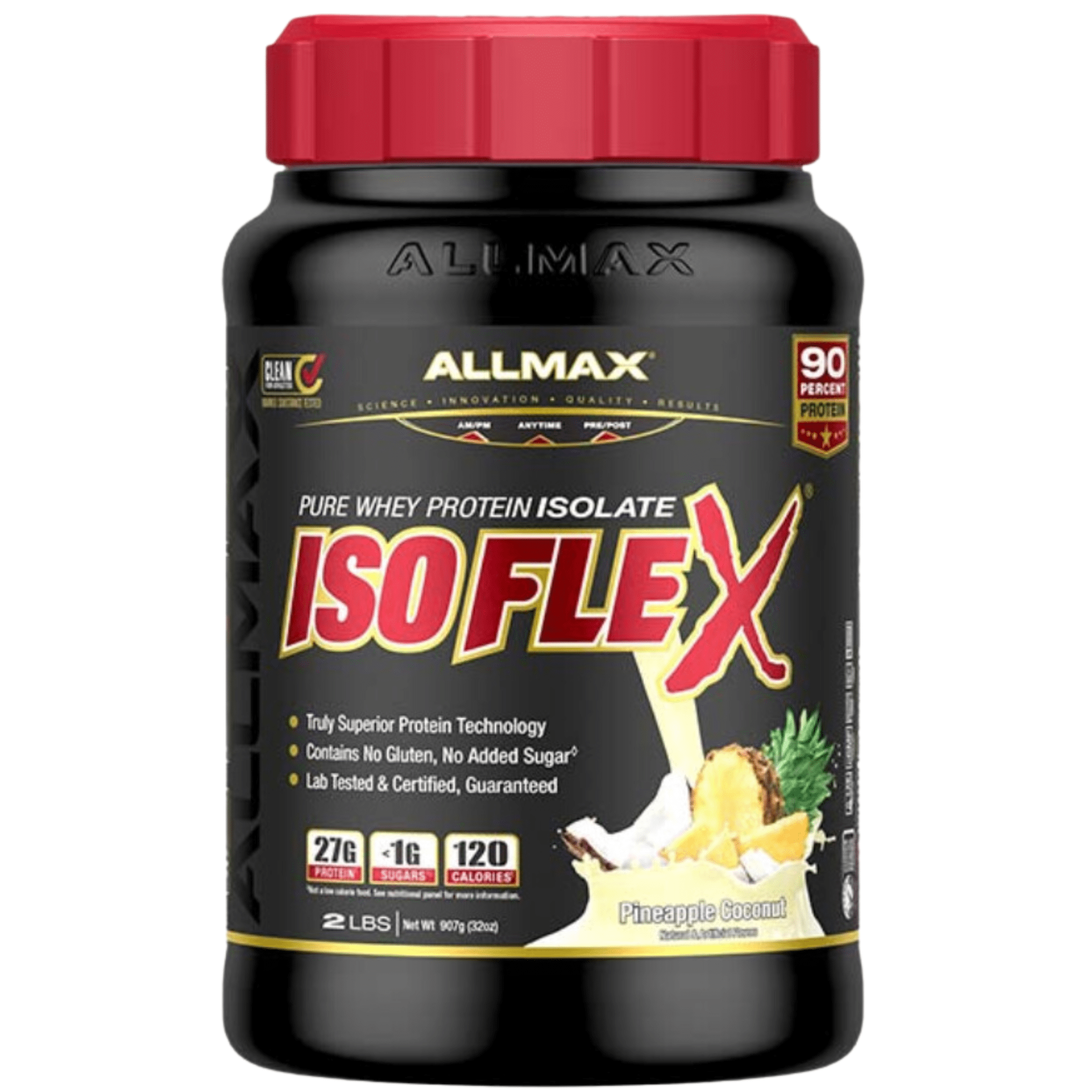
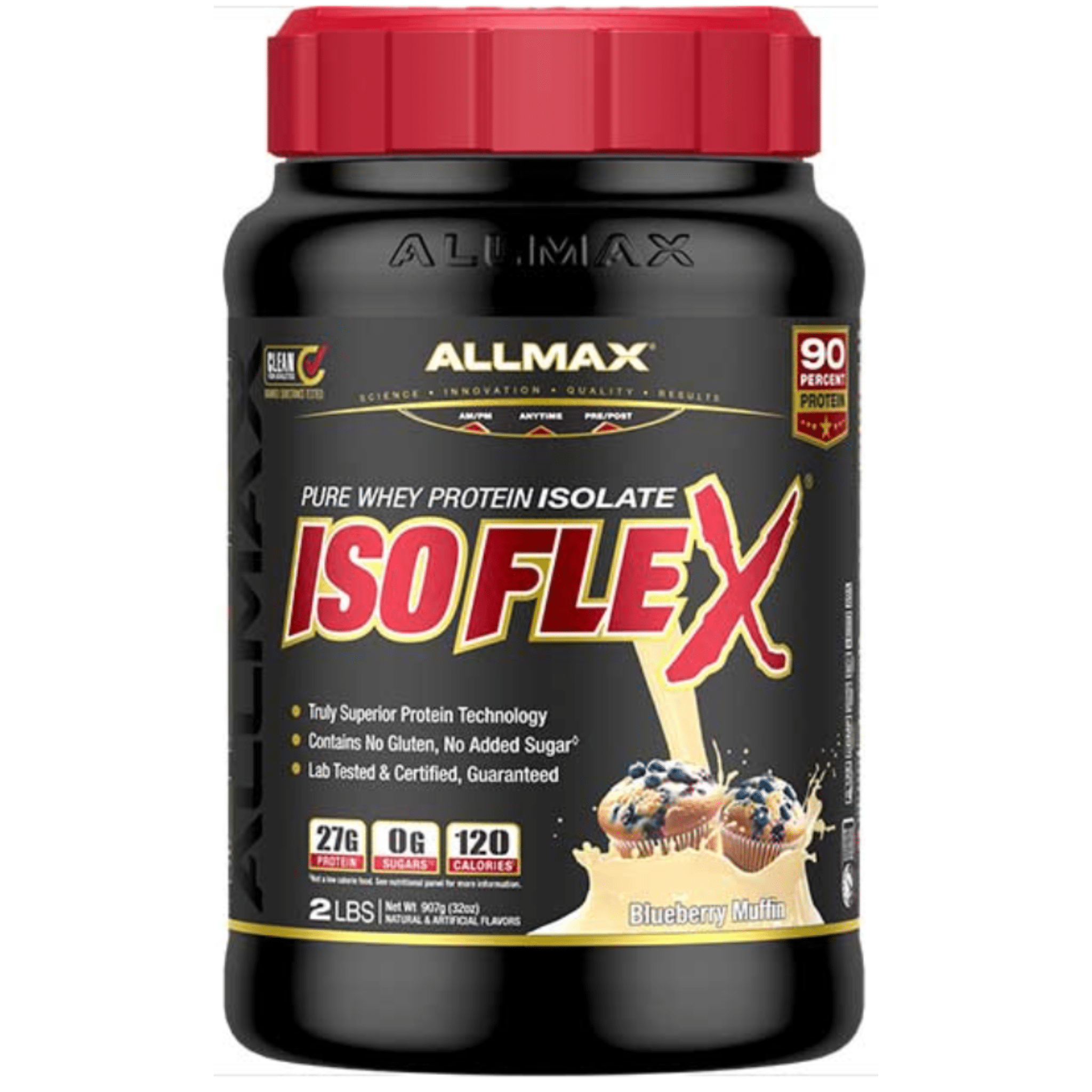
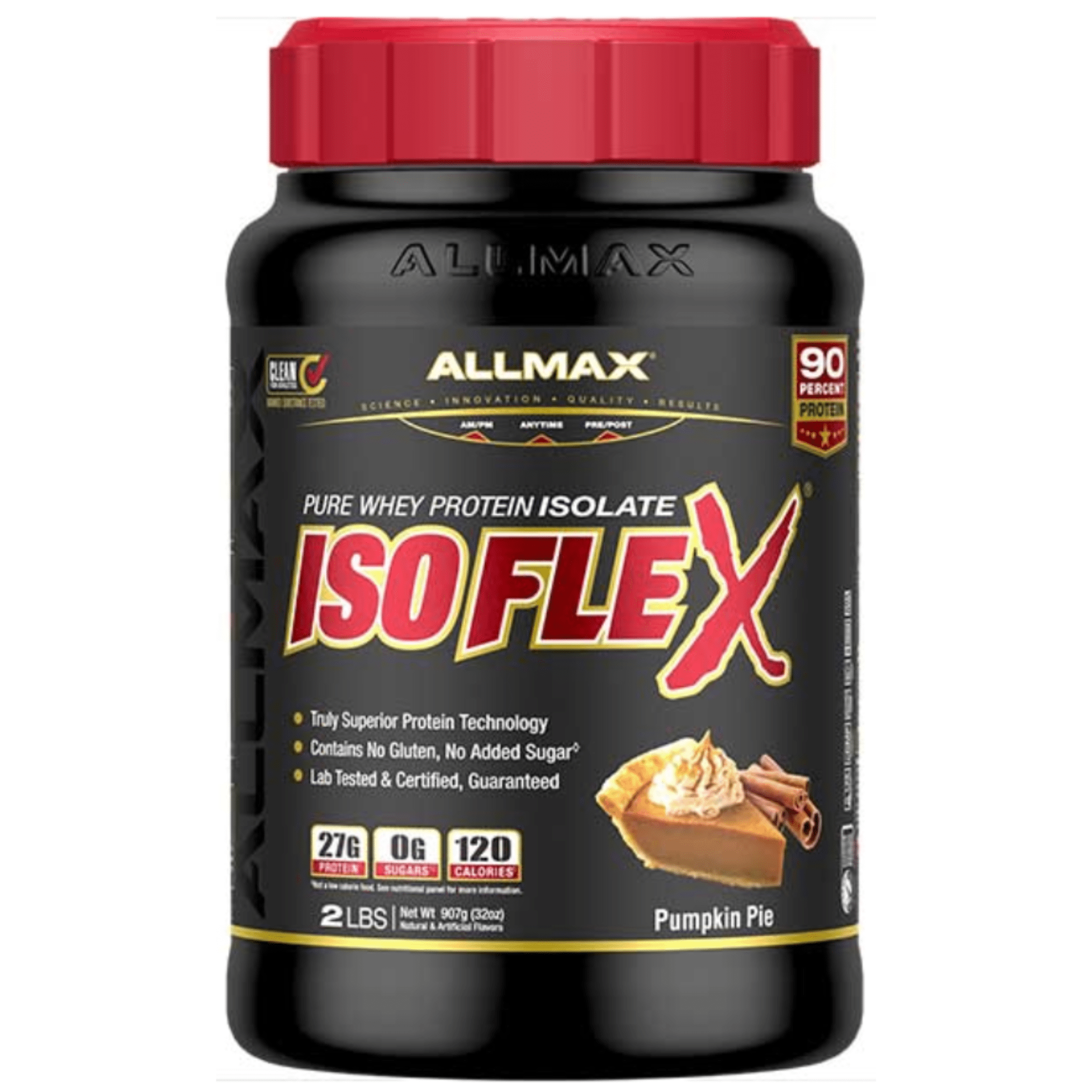
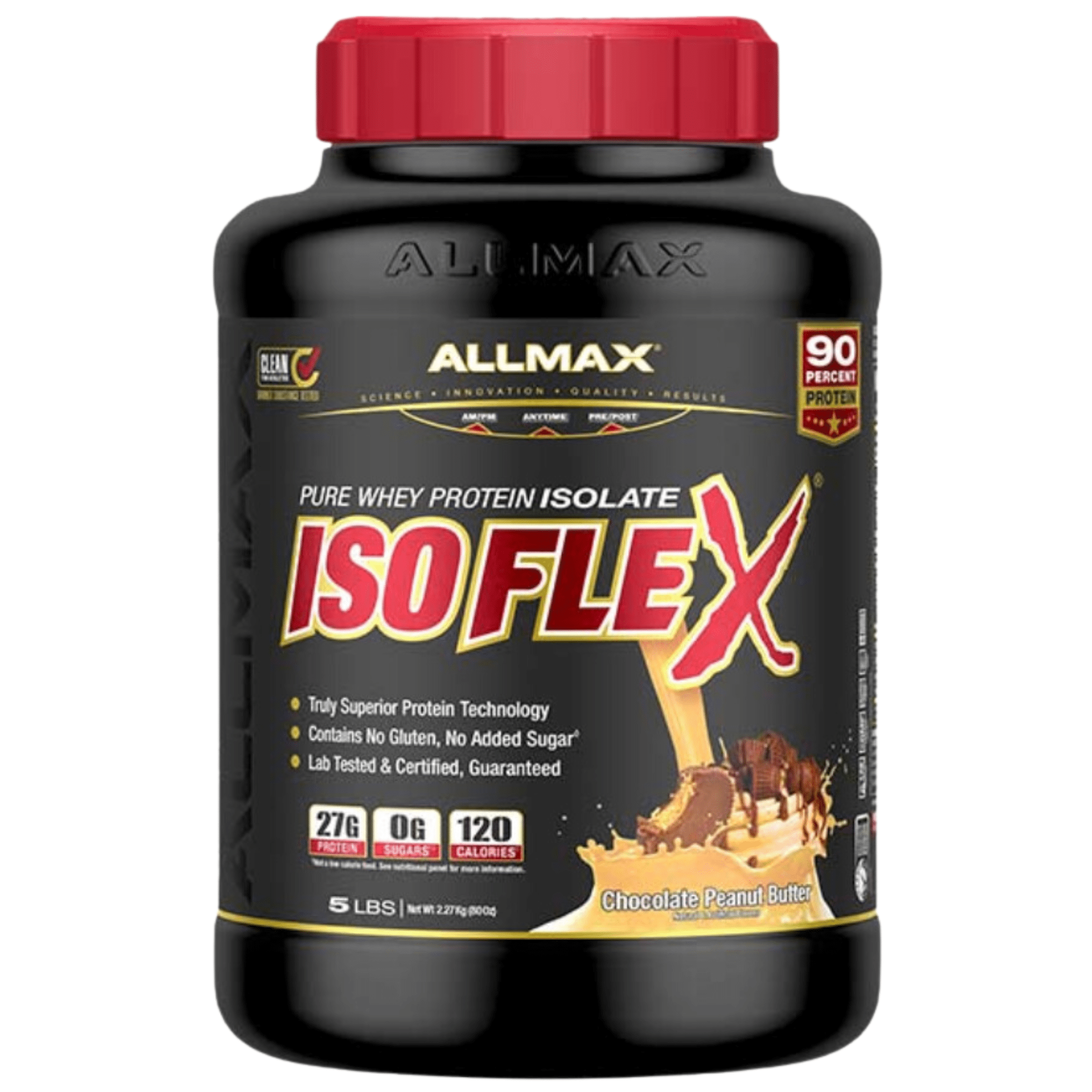
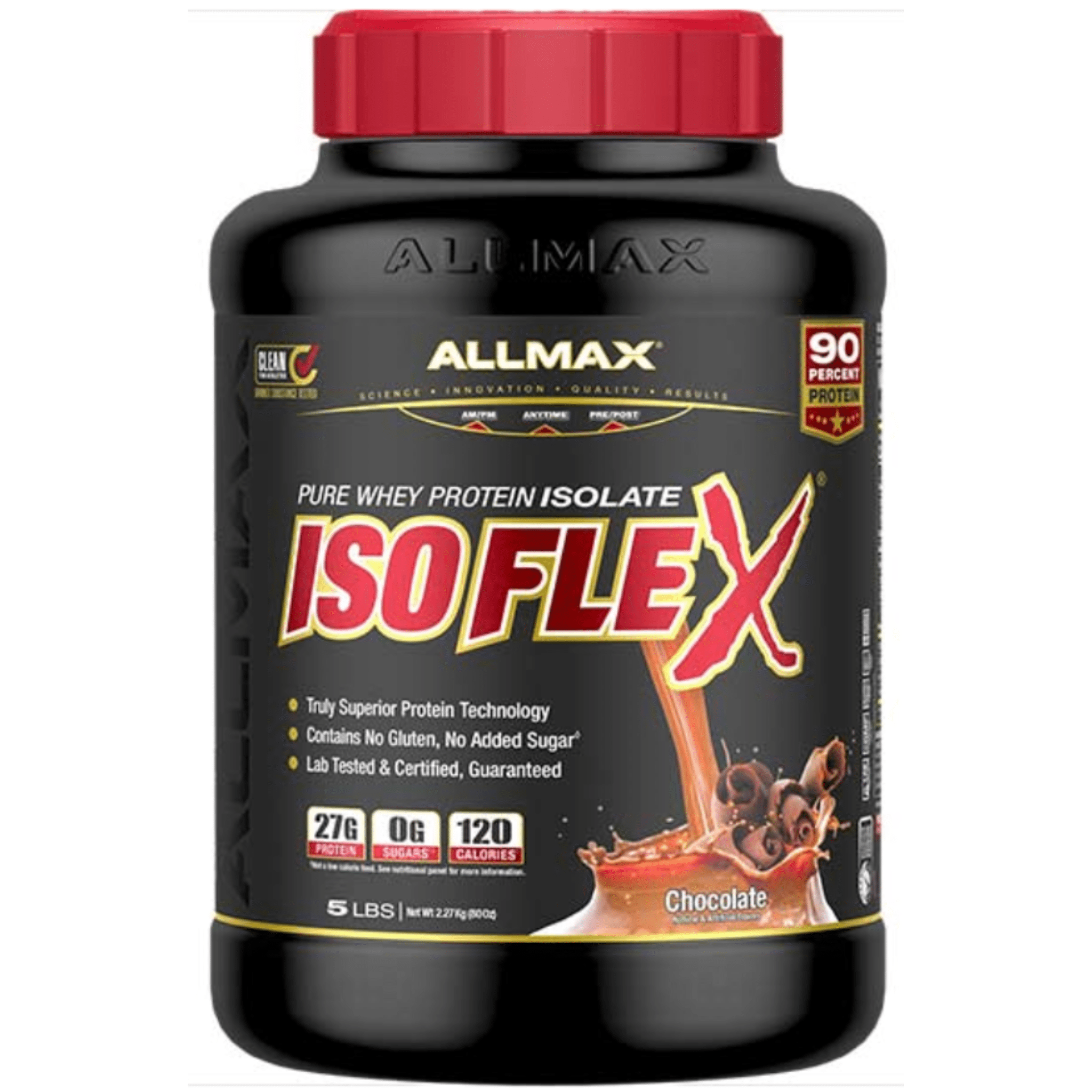
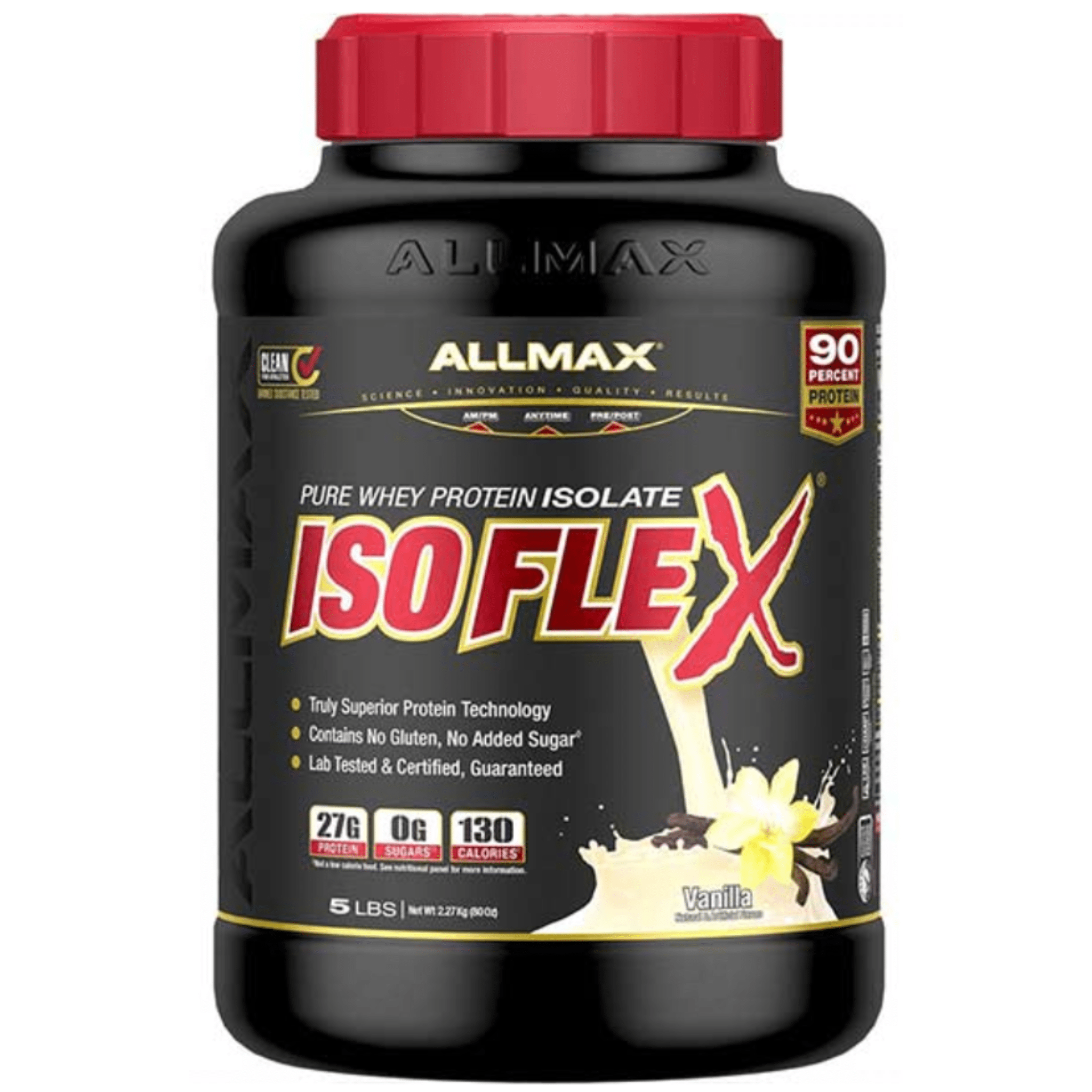
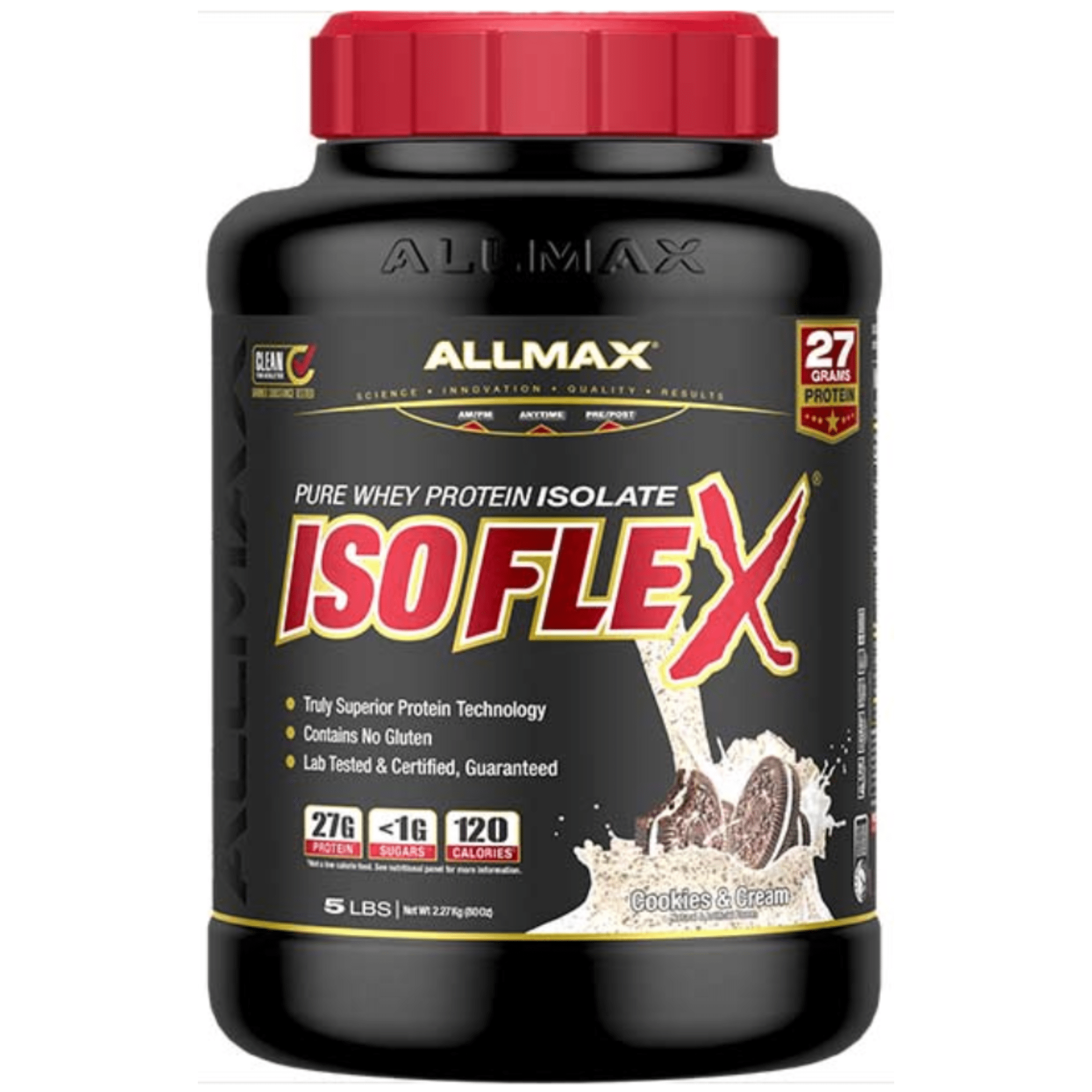
ALLMAX IsoFlex
27 grams of pure whey protein isolate per serving — low fat, low carbohydrate, and one of the leanest proteins we stock.
Run the arithmetic yourself
Here is a check you can do on any protein tub, and it is the most useful thing on this page.
Divide the protein by the scoop weight.
| A pure isolate |
~85% or above |
Almost nothing but protein |
| A typical whey blend |
~70–75% |
Concentrate-led |
| A dessert-style blend |
~55% |
Thickeners and flavour system |
27g is a notably high protein figure per serving, and on an isolate that number is doing real work — there is very little else in the scoop.
That arithmetic is not marketing. It is something you can do on any shelf, and it exposes products where a large scoop is hiding filler.
What isolate means, and where it wins
Whey comes in grades, and the difference is how much filtering has been done.
-
Concentrate — roughly 70–80% protein. Retains more fat, lactose and carbohydrate. Cheaper, and creamier to drink
-
Isolate — filtered further, to around 90% protein before flavouring. Most of the fat and lactose removed
The practical consequences:
-
Lactose is largely filtered out, which is why isolate suits many people who get bloating or discomfort from concentrate. Not a substitute for a milk allergy, but a genuine difference for lactose sensitivity
-
Very low fat and carbohydrate, so nearly all the calories are protein
-
Faster digestion, since there is no fat to slow gastric emptying
Where concentrate wins: it is cheaper and tastes richer. If lactose does not bother you and you are not counting calories tightly, concentrate is perfectly good and better value.
⚠ Amino spiking, and how to spot it
Protein content is commonly measured by nitrogen content — and cheap free-form amino acids such as glycine, taurine and glutamine contain nitrogen too. Adding them inflates the measured protein figure without supplying complete usable protein. A nitrogen test cannot tell the difference.
What defeats it is a fully disclosed ingredient list. If the only protein source listed is whey isolate, and no free-form aminos appear in the ingredients, there is nowhere for spiking to hide.
Check the ingredients, not just the protein number.
Where it sits in our range
Specs
| Protein |
27g pure whey isolate |
| Fat |
Very low |
| Carbohydrate |
Very low |
| ⚠ Allergen |
Contains milk |
How to take it
-
One scoop in 6 to 8oz of water or milk. Water keeps it lean; milk adds roughly 100 calories and improves texture.
-
Any time. The post-workout window is measured in hours rather than minutes, so total daily protein matters far more than timing.
- Aim for 1.6 to 2.2g of protein per kg of bodyweight daily.
-
Isolate needs less liquid than most proteins — it is dense and mixes readily.
Who this is for
- Anyone counting calories, where protein per calorie is the priority
- People who get bloating from whey concentrate
- Anyone cutting, where every calorie has to earn its place
- People on low-carbohydrate or keto approaches
- Anyone wanting the highest protein per serving on our shelf
Who this is not for
Anyone with a milk allergy. Our plant proteins are the alternative — lactose intolerance is different, and isolate is often fine.
Anyone wanting a thick, dessert-like shake. Isolate is lean and thin by design.
Anyone prioritising value per gram — concentrate is cheaper when lactose is not an issue.
Tested athletes should check for third-party certification.
Not for anyone under 18 without medical advice.
Stack it with: creatine, which mixes into a shake without affecting taste.
Frequently asked questions
How much protein per serving?
27g of pure whey isolate — one of the highest per-serving figures on our shelf.
How do I judge a protein powder?
Divide the protein by the scoop weight. Around 85% and above indicates a pure isolate; a typical blend sits nearer 70–75%; a dessert-style blend can drop to 55%.
What is the difference between isolate and concentrate?
Isolate is filtered further — to about 90% protein before flavouring — removing most of the fat and lactose. Concentrate is 70–80%, cheaper and creamier.
Is it suitable if I'm lactose intolerant?
Generally yes, since isolate has most of the lactose filtered out. It is not suitable for a milk allergy.
What is amino spiking?
Adding cheap free-form amino acids to inflate nitrogen-based protein measurements without supplying complete protein. A fully disclosed ingredient list is what defeats it.
When should I take it?
Any time. Total daily protein matters far more than timing.
How much water should I use?
6 to 8 ounces. Isolate is dense and needs less liquid than most proteins.
How much protein do I need daily?
Roughly 1.6 to 2.2g per kilogram of bodyweight, spread across the day.