



Description
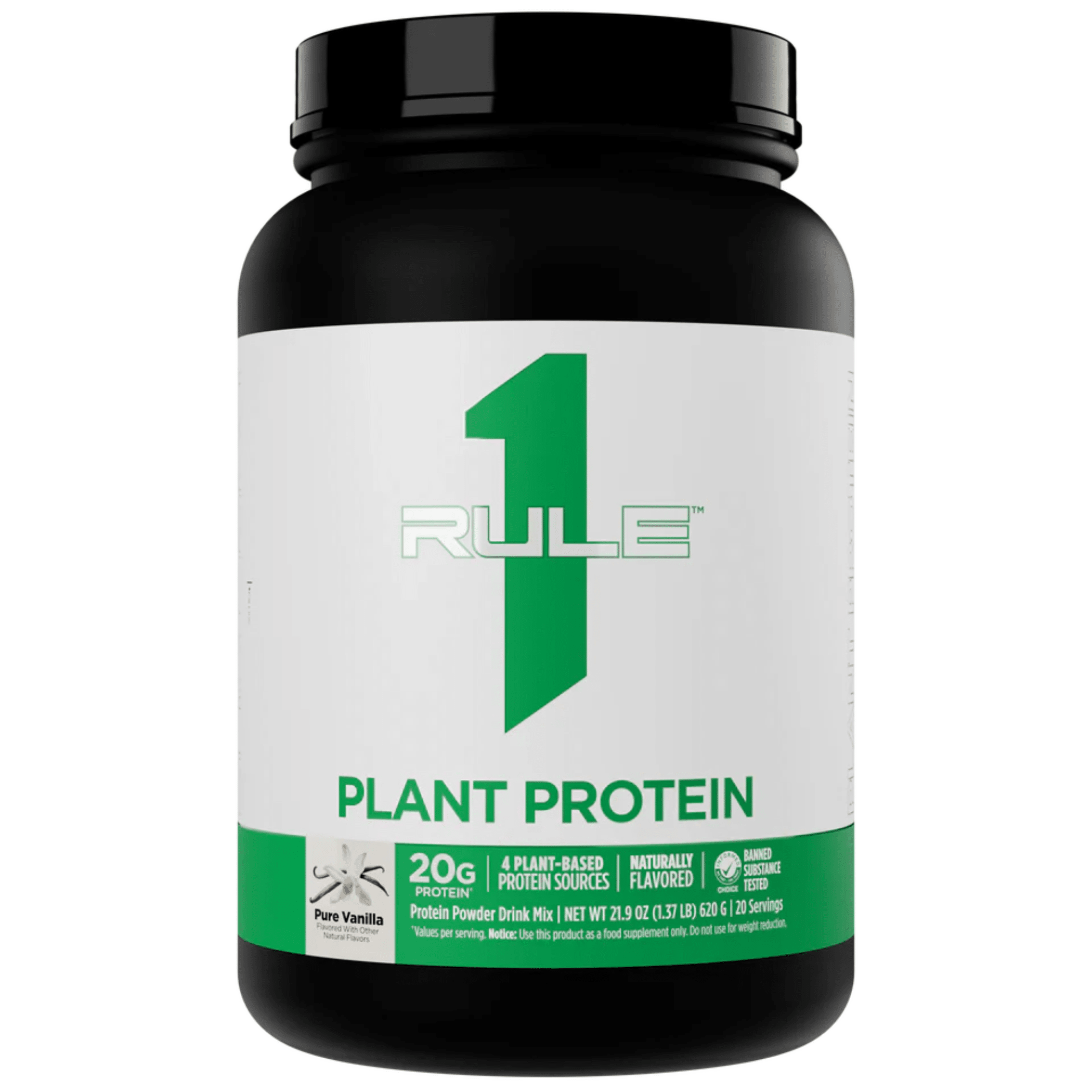
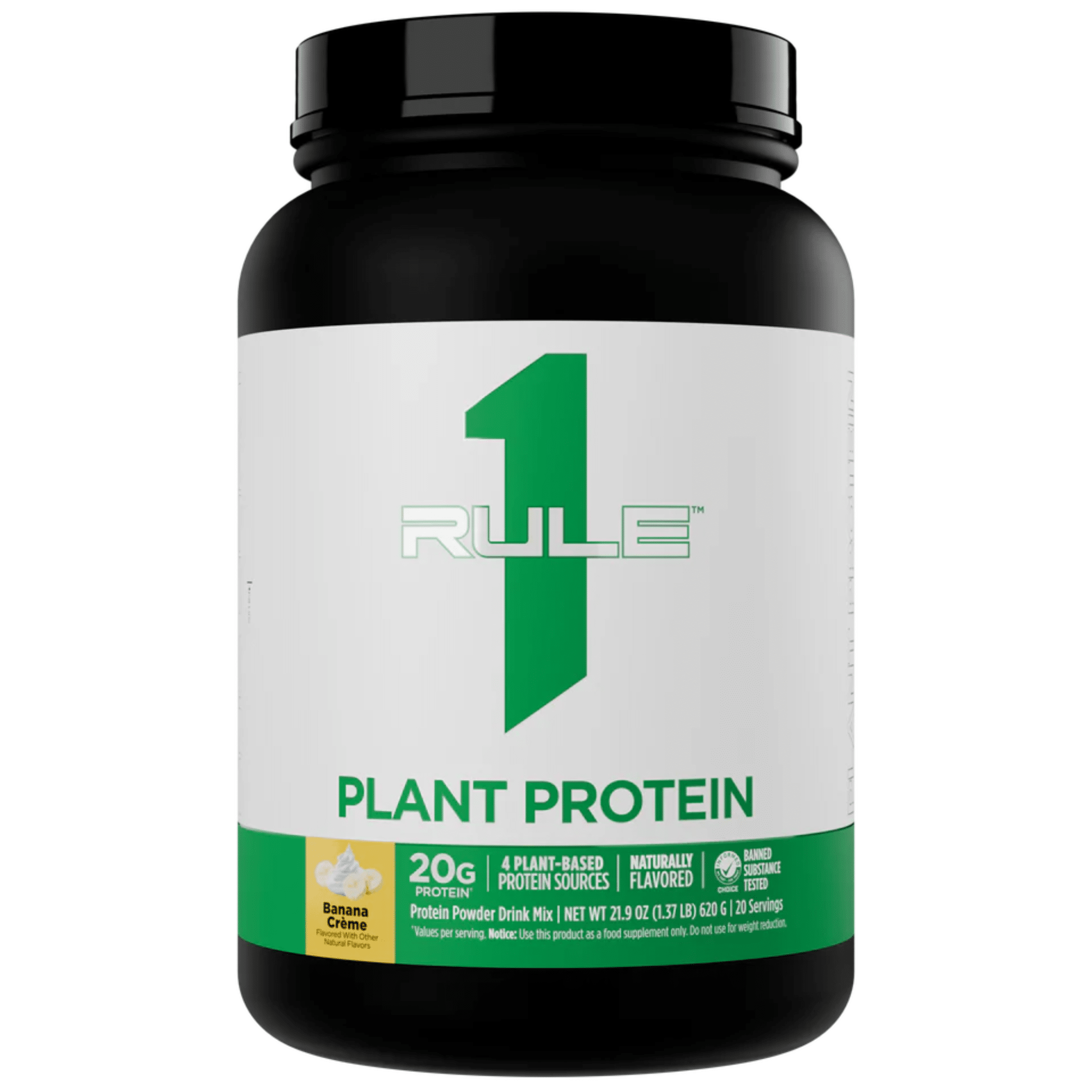
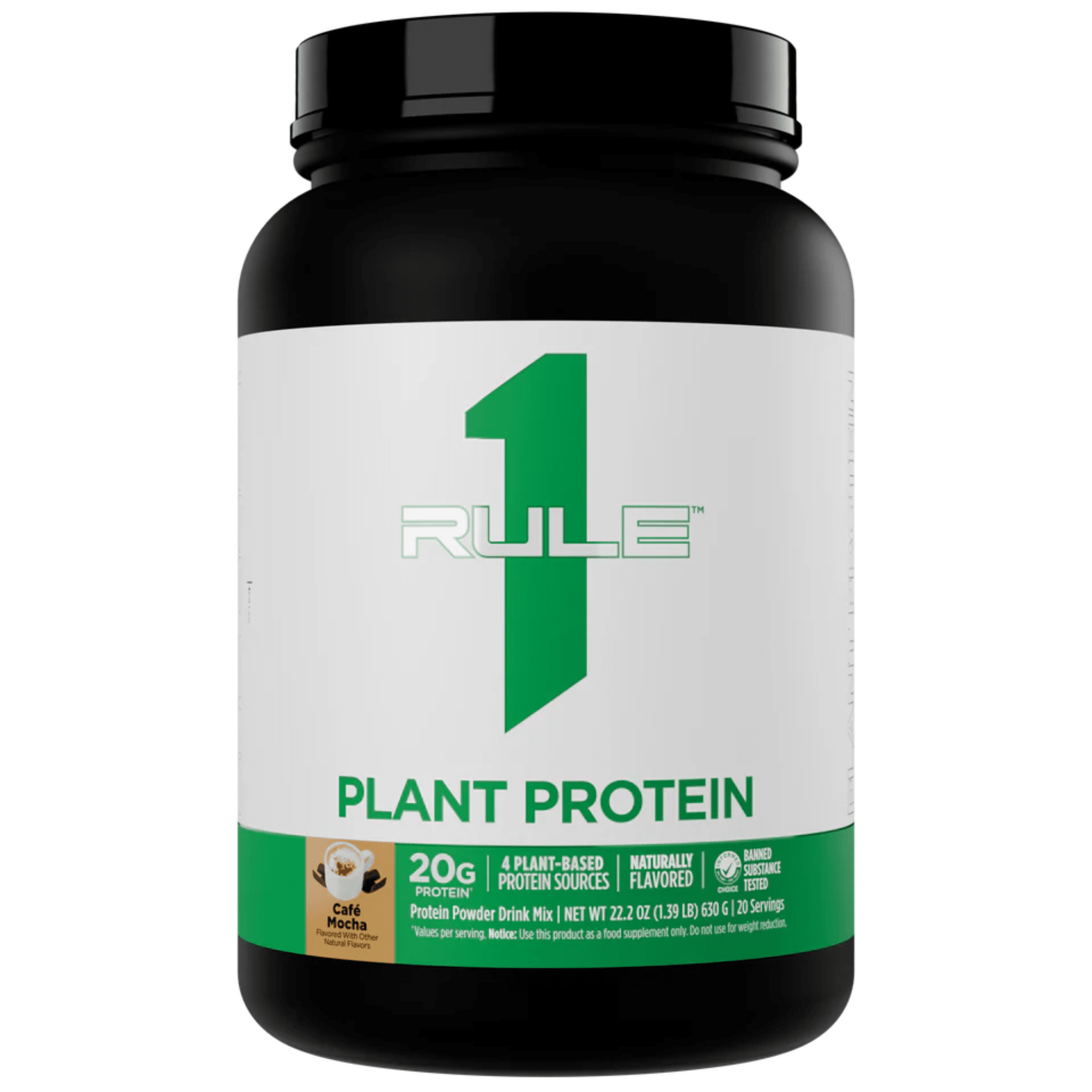
Rule One R1 Plant Protein
20 grams of protein at 120 calories from four plant sources — pea, sunflower seed, pumpkin seed and watermelon seed. Stevia sweetened, soy free, and Informed Choice certified.
The source blend is what makes this different from almost every other plant protein, and there is real thinking behind it.
Why seeds rather than rice
Nearly every vegan protein on the market is pea and rice. R1 Plant Protein uses pea plus three seed proteins, and that choice solves the same problem by a better route.
The problem with pea protein alone: it is excellent in lysine but relatively low in methionine, a sulphur-containing essential amino acid. On its own that leaves the amino acid profile incomplete.
Rice protein is the usual fix, because rice is comparatively higher in methionine. But seed proteins — particularly sunflower and pumpkin — are richer in methionine still, which makes them a more efficient complement.
There is a second reason to prefer seeds, and it is worth knowing. Rice plants take up inorganic arsenic from soil more readily than most crops, and testing of rice-based protein powders has found variable levels across products. It is not a reason to panic about rice protein, and reputable manufacturers test for it — but a blend built on seeds rather than rice does not raise the question at all.
Watermelon seed protein has a nice piece of history behind it
This is the ingredient people skim past, and it connects to something you have probably taken.
Citrulline — the pump ingredient in every pre-workout on our shelf — was originally isolated from watermelon. That is where the name comes from: watermelon's botanical name is Citrullus lanatus.
Watermelon seed protein is naturally comparatively rich in arginine, the amino acid citrulline converts to in order to produce nitric oxide.
The amount in a protein serving is nowhere near a pre-workout dose, so do not buy this expecting pumps. But it is a genuine and rather elegant piece of formulation rather than an ingredient chosen for the label.
Informed Choice certification on a plant protein is unusual
R1 Plant Protein is regularly tested for banned substances by LGC, one of the major sports anti-doping laboratories.
Certification costs money to maintain, so it usually appears on flagship whey products rather than plant-based lines. Most vegan proteins carry none at all.
If you compete in a tested federation and eat plant-based, this is a genuinely short list to choose from. Rule One also manufacture in their own GMP-certified facility rather than contracting production out.
Specs
| Protein | 20g |
| Calories | 120 |
| Carbohydrate | 4g |
| Fibre | 2g (including prebiotic inulin) |
| Fat | 2g |
| Sources | Pea, sunflower seed, pumpkin seed, watermelon seed |
| EAAs | All nine, naturally occurring |
| Sweetener | Stevia leaf extract |
| Certification | Informed Choice, tested by LGC |
| Free from | Dairy, lactose, soy, gluten, cholesterol, artificial flavours and colours |
| Servings | 20 |
Soy free is worth flagging — several proteins use soy lecithin as a mixing agent, so this suits anyone avoiding soy. R1 uses a gum blend of guar, acacia and xanthan instead.
⚠ One note on the inulin. It is included as prebiotic fibre and it is a sensible addition for most people — but inulin is a fermentable fibre and a common FODMAP trigger. If you have IBS or follow a low-FODMAP diet, start with half a scoop.
Honest note on 20g and 120 calories
Two things worth knowing rather than glossing over.
20g is standard for a plant protein but 5g below a typical whey isolate. Plant proteins generally run lower, partly because the raw materials are less concentrated.
Leucine is the number that matters more. Plant proteins are naturally lower in leucine — the amino acid that actually triggers muscle protein synthesis — than dairy proteins are. If this is your main post-training protein and maximising that response matters to you, a scoop and a half is a reasonable adjustment. If it is a top-up alongside meals, 20g is perfectly appropriate.
Which vegan protein should you buy?
| Protein | Distinguishing feature | |
| R1 Plant Protein | 20g / 120 cal | Informed Choice certified. Seed-based, soy free |
| Core VEGAN | 21g / ~120 cal | Best taste. Sucralose. Contains coconut |
| PEScience Select Vegan | 20g / ~110 cal | Stevia, simplest label |
| 1st Phorm Vegan Power Pro | 19g / 100 cal | Adds greens, vitamins and enzymes |
The honest guide: R1 if you are a tested athlete or avoiding soy. Core VEGAN if taste matters most. PEScience for the simplest stevia-sweetened option. Vegan Power Pro if you want greens and vitamins bundled in — though note it is made on shared equipment with milk and egg.
How to mix it
- One heaping scoop in 8 to 10 ounces of water or plant milk. Plant proteins need more liquid than whey.
- Cold water genuinely matters with any plant protein — it mixes considerably better.
- The gum blend (guar, acacia, xanthan) improves texture, which is why this drinks better than a plain pea protein.
- Blend with fruit if you find plant proteins gritty. Frozen banana in particular transforms the texture.
- Post-workout, between meals, or at bedtime. Plant proteins digest at a moderate pace.
Who this is for
- Tested athletes who eat plant-based — Informed Choice certification is rare here
- Anyone avoiding soy, which several proteins include as lecithin
- People who would rather avoid rice protein
- Anyone avoiding artificial sweeteners
- Vegans, vegetarians, and anyone dairy-free or lactose intolerant
- People following paleo or keto approaches — 4g carbs, 2g of that fibre
Who this is not for
If you dislike stevia, Core VEGAN uses sucralose instead.
If you have IBS or follow low-FODMAP, the inulin may not suit you. Start small.
If you want maximum protein per serving, whey isolates deliver 25g. If you can tolerate dairy, whey remains stronger gram for gram — higher leucine, faster absorption, more research behind it. Choose plant for a reason.
If you want a thick, creamy shake, plant proteins are thinner and grittier by nature.
Stack it with: creatine — worth noting that the main dietary sources are meat and fish, so plant-based eaters start from a lower baseline and often respond more. See our creatine range.
Frequently asked questions
How much protein per serving?
20g at 120 calories, from pea, sunflower seed, pumpkin seed and watermelon seed protein.
Why seeds instead of rice?
Pea protein is low in methionine and needs a complement. Sunflower and pumpkin seed proteins are richer in methionine than rice is, so they fill that gap more efficiently — and a seed blend avoids the arsenic question that rice-based proteins raise.
Is it a complete protein?
Yes — the blend provides all nine essential amino acids, naturally occurring rather than added.
Why watermelon seed protein?
It is comparatively rich in arginine. Citrulline, the pump ingredient in pre-workouts, was originally isolated from watermelon — hence the name Citrullus lanatus. The amount here is nowhere near a pre-workout dose.
Is it tested for banned substances?
Yes, Informed Choice certified by LGC — unusual for a plant protein, since most carry no certification at all.
Does it contain soy?
No. It uses a guar, acacia and xanthan gum blend rather than soy lecithin.
What is the inulin for?
Prebiotic fibre, which feeds the bacteria already in your gut. Note that inulin is a common FODMAP trigger — start with half a scoop if you have IBS.
Is 20g enough?
For a top-up alongside meals, yes. Plant proteins are naturally lower in leucine than dairy, so if this is your main post-training serving, a scoop and a half is a reasonable adjustment.
Delicious, blends well and digests well!
The protein is way too thick and doesn’t taste very good
You may also like
Recently viewed
- Opens in a new window.